

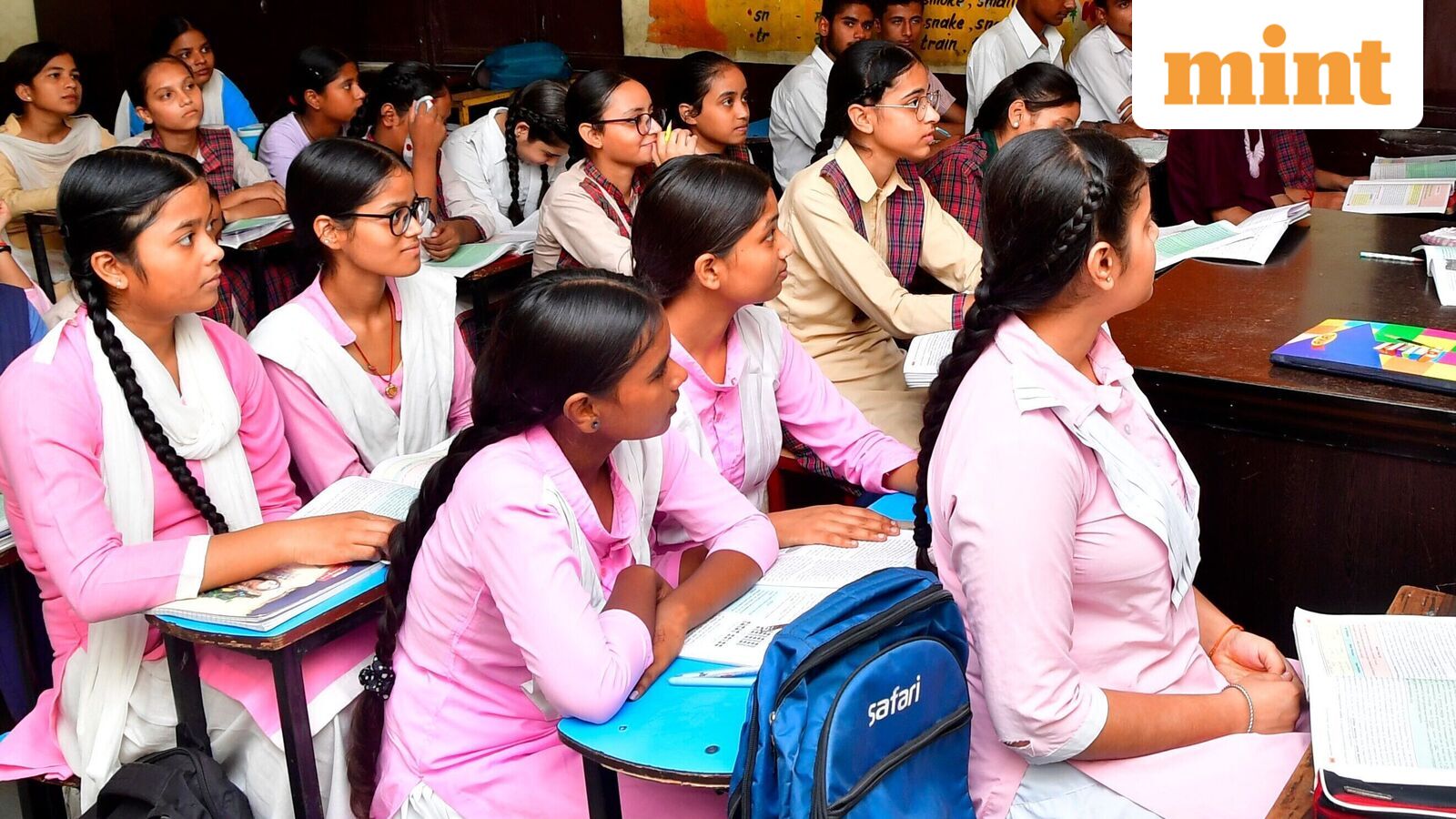
The Central Board of Secondary Education (CBSE) has notified the implementation of the three-language formula for all students of Class 9. Under this, the students will learn a total of three languages, out of which two must be native to India. The three-language formula will be rolled out in the 2026-27 academic session and classes will start from July 1.
Why three-language formula?
According to the National Education Policy (NEP) 2020 an “early implementation of the three-language formula to promote multilingualism” from the school level. It states that three-language formula will continue to be implemented “while keeping in mind the constitutional provisions, aspirations of the people, regions, and the Union, and the need to promote multilingualism as well as promote national unity”. This applies to both government and private schools.
Who chooses the third language?
According to the NEP, there will be greater flexibility in the three-language formula, and no language will be imposed on any state. The policy states that the three languages learned by children will be the choices of states, regions, and of course, the students themselves, so long as at least two of the three languages are native to India. This includes Hindi, Sanskrit, Bengali, Assamese, Manipuri, Marathi, Tamil, Telugu, Kannada, Malayalam, Gujarati, Odia, Punjabi, Urdu, among others.
What are the foreign languages?
According to NEP 2020, in addition to Indian languages and English, students at the secondary level can also learn Korean, Japanese, French, German and Spanish, among other foreign languages. However, with the CBSE mandating that at least two of the languages should be of Indian origin, states, schools and students are likely to keep only English as the foreign language.
Is CBSE ready for three-language formula?
The CBSE notified the implementation of the three-language formula even before books had been prepared and schools have also not been able to appoint adequate resources to teach the additional Indian language. The board has said till the dedicated R3 textbooks are available, Class 9 students shall use the Class 6 R3 textbooks (2026-27 edition) of the chosen language.
The board has further said schools facing a shortage of adequately-qualified native Indian language teachers may, as an interim arrangement, engage existing teachers of other subjects who possess functional proficiency in the language concerned.
Board exam
Unlike the R1 (first language) and R2 (second language) no board examination will be conducted for R3.