

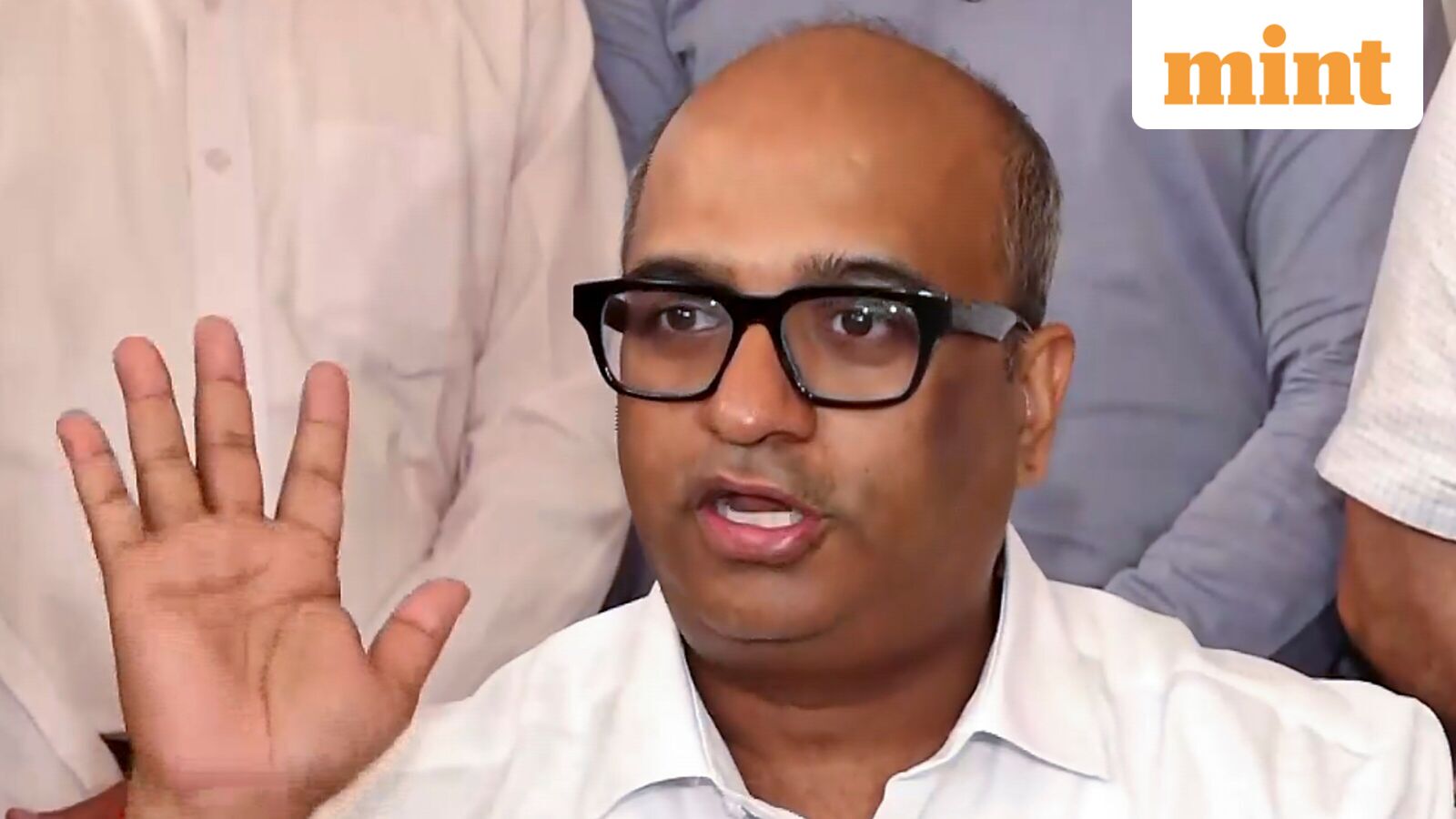
Following a week’s ban on Telegram, National Testing Agency Director General Abhishek Singh claimed that multiple layers of security have been added to avoid any malpractice in the National Eligibility Entrance Test (Undergraduate) (NEET [UG]) scheduled for 21 June. This statement came a day after the government imposed a temporary ban on Telegram on 16 June. This ban will remain in effect until 22 June.
Suggesting that security has been tightened to avoid any irregularities in the conduct of the crucial medical entrance exam this time, Abhishek Singh said, “NTA is committed 100% to ensure that no malpractice will happen. Every question paper has been made in a completely secure manner. We have added layers of security to what is normally done,” ANI reported.
Declaring that multiple agencies have been roped in to ensure that the NEET UG exam is conducted in a free and fair manner, he added, “We have taken every single precaution to ensure that nobody who is involved in setting up the question papers or translating them or printing them or moving them or storing them till the date of the examination is compromised in any manner. We have taken help from multiple agencies, including the Ministry of Home Affairs, the paramilitary, the Department of Posts, and the Ministry of Defence. Ministry of External Affairs, the state governments, state police, state administration, chief secretaries, everybody is helping NTA.”
On Tuesday, the National Testing Agency (NTA) Director General said that scammers were extensively misusing the messaging platform to scam students and circulate fake question papers ahead of the re-NEET exam. Explaining the rationale behind the restrictions on Telegram, General Abhishek noted that the platform was allegedly used to fabricate evidence of question paper leaks through edited messages carrying old timestamps
On the scam network operating on Telegram, NTA Director General Abhishek Singh, in a video message, said the messaging app was running two scam rackets targeting students. Suggesting access to the re-exam paper, some channels are demanding ₹14,000 to ₹25,000, even up to ₹ 10 lakh, the agency said, dismissing such claims as untrue. Another scam rinvolves fake “proof” videos purporting to show chats from before the exam. Criticising the app for its edit feature, NTA added, “Whoever runs a channel can edit any old message AND change what’s inside it, while the date on the message stays the same. So a message edited on the 4th can be made to look exactly like it was sent on the 1st.”
Notably, the NTA is conducting the NEET retest after the national-level screening test held on 3 May was cancelled due to allegations of a paper leak. Telegram CEO Pavel Durov protested the recent ban on Telegram and alleged that the move by India’s IT ministry “punishes 150M+ ordinary Telegram users in India” rather than targeting the insiders who leaked the exam materials. According to him, this ban hasn’t stopped anything, and the leaks just moved to other apps.
NTA issues statement on Telegram ban
NTA stated on 16 June, exposing the large-scale “Telegram-based fraud and misinformation targeting NEET (UG) 2026 candidates.” According to the press release, the Indian Cyber Crime Coordination Centre (I4C) under the Ministry of Home Affairs (MHA) took down a substantial number of Telegram channels, groups, and bots whose names and content openly advertised their fraudulent or misleading purpose.
Moreover, NTA raised concerns about Telegram’s “message-editing feature in India” and revealed that authorities directed the platform to turn it off until June 30. It argued that scammers use this feature to fabricate evidence of exam paper leaks after tests have been conducted.