

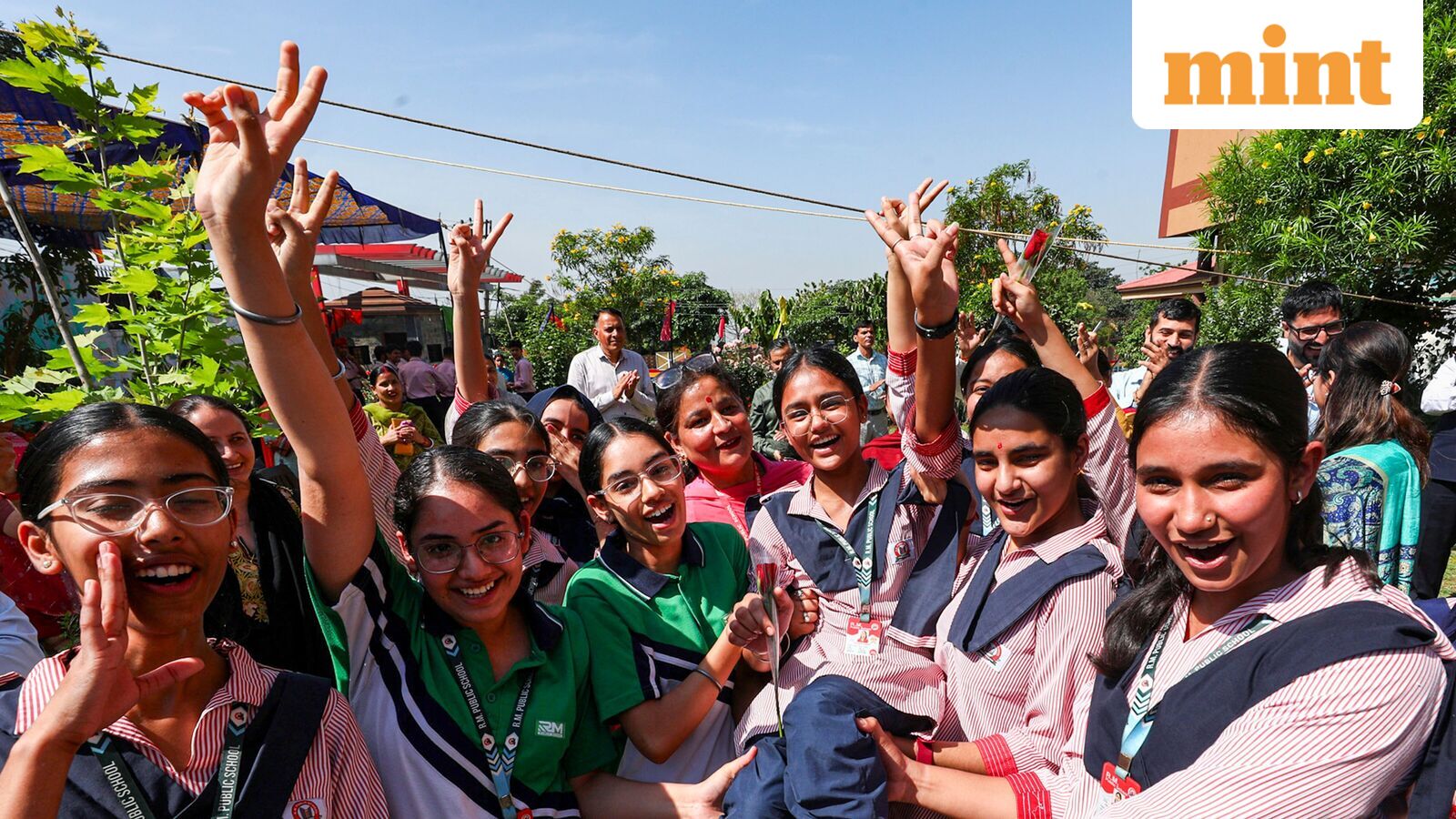
The CBSE Class 12 board exam results were announced on Wednesday, with a senior official confirming that more than 85 per cent of students passed this year.
However, the overall pass percentage declined by more than three percentage points compared to the previous year. Examination Controller Sanyam Bhardwaj stated that over 94,000 students scored above 90 per cent marks, while more than 17,000 candidates achieved scores exceeding 95 per cent.
Meanwhile, CBSE used an online digital evaluation known as the On-Screen Marking platform to evaluate answer scripts this year. The CBSE had announced the introduction of OSM for the evaluation of Class 12 answer books from the 2026 board examinations. The exams commenced on February 17.
In a major shift toward modernisation, CBSE successfully implemented full-scale OSM for the evaluation of 9,866,622 answer books.
What is On-Screen Marking (OSM)?
On-Screen Marking (OSM) is a digital method of evaluating answer scripts on computer screens instead of using physical copies. In a circular issued to principals of affiliated schools on February 9, the board said the move aims to enhance efficiency, transparency and accuracy in the assessment process. This digital initiative was designed to eliminate traditional errors in totalling and posting marks, ensuring a more accurate and transparent result for students.
According to the CBSE, the OSM system offers several advantages over the traditional evaluation process. The digital platform helps eliminate totalling errors and reduces the need for manual intervention through automated coordination.
It also speeds up the evaluation process while enabling wider participation from teachers, who can continue performing their regular duties at their own schools.
The system saves transportation time and logistical costs associated with handling physical answer sheets. Additionally, post-result verification or rechecking of marks may no longer be necessary, reducing the manpower required for verification work. CBSE also said that OSM gives all affiliated schools, including those overseas, an opportunity to participate in the evaluation process while promoting an environmentally sustainable and paper-efficient system.
Traditional evaluation process vs OSM process
| Traditional Evaluation Process | On-Screen Marking (OSM) Process |
|---|---|
| Answer sheets were checked manually using physical copies. | Answer sheets are evaluated digitally on computer screens. |
| Teachers had to total marks by hand, which sometimes caused calculation errors. | The system automatically manages calculations, reducing totalling mistakes. |
| Physical handling and transportation of answer sheets caused delays and increased workload. | Digital access removes the need for transporting copies, making evaluation faster and easier. |
| Teachers often had to travel to evaluation centres for checking. | Teachers can evaluate answer sheets from their own schools through the online platform. |
| Rechecking and verification required additional manpower and time. | Automated processes reduce manual intervention and minimize the need for post-result verification. |
CBSE Class 12 results: Know the top-performing region
Trivandrum emerged as the top-performing region with a pass percentage of 95.62%, followed by Chennai at 93.84% and Bengaluru at 93.19%. In the national capital, the Delhi West region recorded a 92.34% pass rate, while Delhi East stood at 91.73%.
Institutional Performance: Kendriya Vidyalayas (KVs) and Jawahar Navodaya Vidyalayas (JNVs) led among institutions with pass percentages of 98.55% and 98.47%, respectively.
Results are now available online via the official CBSE website, DigiLocker, and the UMANG app. Digital documents provided through DigiLocker are legally valid for higher education admissions.
For students who wish to improve their performance or those placed in the compartment category, a supplementary examination is scheduled for July 15, 2026. The application process (LOC) for these exams will begin on June 2, 2026.
The board conducts Class 10 and 12 examinations annually in India and 26 countries, catering to nearly 46 lakh students.
(With inputs from agencies)